Quick Answer
Dave Ramsey opposes reverse mortgages primarily because of their fees and because his broader philosophy treats all debt as harmful — and on the fee point he is substantively correct, since reverse mortgage closing costs are genuinely high, though his position does not distinguish between the borrower for whom that cost is unjustifiable and the one for whom it is clearly worth paying.
- Ramsey's core objection is fees, and reverse mortgage fees are genuinely high.
- His philosophy treats all debt as harmful, which is a coherent position but not a universal one.
- He recommends selling and downsizing instead, which has its own substantial costs.
- His advice is sound for borrowers with short expected tenure or minimal equity.
- It is less sound for a 72-year-old with $700,000 in equity eliminating a $2,000 monthly payment.
- Reasonable people can weigh the same facts differently — the fee criticism deserves a real answer, not dismissal.
Key Facts
| Topic | Key Fact |
|---|---|
| Ramsey's primary objection | High fees and closing costs |
| Typical California closing costs | $18,000 to $35,000 |
| Upfront FHA MIP | 2% of the maximum claim amount, up to $24,983 |
| Ramsey's recommended alternative | Sell the home and downsize |
| Cost of selling | 5-6% realtor commission plus closing costs and moving |
| Where Ramsey is strongest | Short tenure, minimal equity, or debt-averse clients |
| Where the analysis differs | Long tenure with substantial payment elimination |
| Common ground | Both agree a reverse mortgage is wrong for many people |
Detailed Explanation
Dave Ramsey's opposition rests on two arguments, and the first one is largely correct. Reverse mortgage fees are high. On a California transaction, closing costs typically run $18,000 to $35,000 — driven substantially by the upfront FHA mortgage insurance premium of 2% of the maximum claim amount, which reaches $24,983 at the lending limit. That is real money, it comes out of the borrower's equity, and anyone who tells you it is trivial is not being straight with you. Ramsey is right to say it loudly.
His second argument is philosophical rather than arithmetic. Ramsey's entire framework treats debt as categorically harmful, and a reverse mortgage is debt against the borrower's largest asset. This is an internally coherent position and it serves many people well. But it is a values position, not a calculation, and applying it universally means recommending against transactions that would clearly improve a specific household's financial situation. A 72-year-old with $700,000 in equity who eliminates a $2,000 monthly payment recovers the closing costs in about eleven months and improves their cash flow permanently.
His recommended alternative — sell and downsize — carries costs he tends to weigh less heavily. A 5.5% realtor commission on a $900,000 California home is $49,500. Add closing costs, moving expenses, and potentially capital gains above the exclusion, and the transaction cost of selling frequently exceeds the reverse mortgage closing costs he objects to. The seller also loses their Proposition 13 basis and all future appreciation on the property. That does not make downsizing wrong — it makes the comparison more complicated than the fee objection alone suggests.
Where Ramsey's advice is genuinely strong: for a borrower who will move within a few years, the closing costs will not be recovered and he is simply right. For a borrower with minimal equity where net proceeds would be small, he is right. And for a borrower whose psychology cannot tolerate a growing balance regardless of the math, he is right, because financial decisions that cause chronic anxiety are bad decisions even when the arithmetic favors them. The honest position is that Ramsey and a good CRMP would agree to decline a substantial share of prospective borrowers — they would just disagree about the remainder.
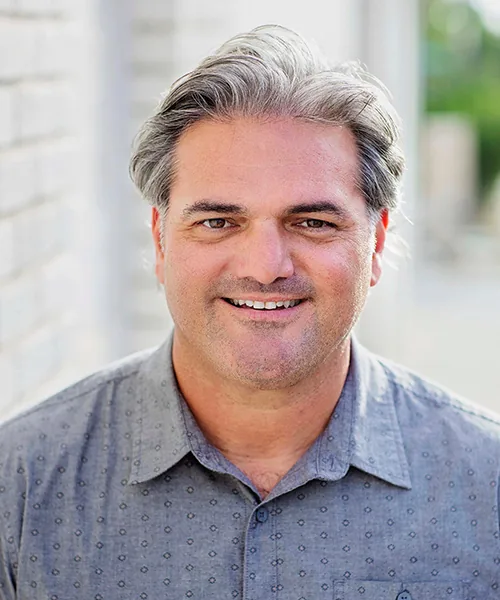
Jay Zayer, CRMP — 18 Years Experience
I am not going to tell you Dave Ramsey is wrong about the fees, because he is not. They are high. I show every client the total on page two of the Loan Estimate and I do not soften it. Where I differ is that he applies one answer to everyone, and I see people every week for whom the answer genuinely differs. I have also turned away clients whose situation matched his advice exactly and told them so. If you follow Ramsey's philosophy and it has served you well, that is a real position and I am not going to argue you out of it.
Who This Is Right For
This may be a good fit if:
- Anyone who has heard Ramsey's position and wants to understand where it is strong and where it is incomplete
- Borrowers weighing the fee objection seriously before deciding
This may NOT be the right fit if:
- There is no situation where engaging with the criticism honestly would be inappropriate
Common Misconception
Myth: Dave Ramsey's opposition to reverse mortgages is based on outdated information.
Fact: His primary objection — that the fees are high — is factually accurate today. California closing costs run $18,000 to $35,000. The disagreement is not about the facts but about whether that cost is justified in specific situations, which depends on tenure, equity, and what the proceeds accomplish.
Source: HUD: HECM fee structure; California Association of Realtors transaction cost data
Authoritative Sources
- HUD: HECM closing cost structure — hud.gov
- California Association of Realtors: Transaction costs — car.org
- CFPB: Reverse mortgage cost comparison — consumerfinance.gov
People Also Ask
Is Dave Ramsey right that reverse mortgage fees are too high?
He is right that the fees are high — $18,000 to $35,000 in California. Whether they are too high depends on what they accomplish. Eliminating a $2,000 monthly payment recovers them in roughly eleven months; a short-tenure borrower never recovers them.
What does Dave Ramsey recommend instead of a reverse mortgage?
Selling the home and downsizing. This has its own costs — roughly 5-6% in commission, moving expenses, and in California the permanent loss of the Proposition 13 tax basis and all future appreciation.
Are there situations where Ramsey's advice is clearly correct?
Yes. For borrowers who will move within a few years, borrowers with minimal equity, and borrowers whose psychology cannot tolerate a growing balance, his position is sound and a good CRMP would decline the transaction too.