Quick Answer
The executor or trustee notifies the servicer of the death, obtains a payoff statement, and coordinates the sale, refinance, or surrender — trust-held property avoids probate and substantially simplifies this process.
- How does the estate settle a reverse mortgage? — full answer at reversemortgage.coach/ask-jay/estate-settle-reverse-mortgage.
- The reverse mortgage balance grows at approximately 7.4% annually including MIP, doubling roughly every 9 to 10 years.
- Undrawn credit line funds do not accrue — they grow as available credit at the same rate.
- The FHA non-recourse guarantee caps liability at the home's value regardless of how long the loan runs.
- Property taxes, insurance, occupancy, and maintenance obligations continue for the life of the loan.
Key Facts
| Topic | Key Fact |
|---|---|
| does the estate settle a reverse mortgage | Full answer |
| reversemortgage.coach/ask-jay/estate-settle-reverse-mortgage | 2026 accrual rate |
| Approximately 6.88% to 7.63% including 0.5% annual MIP | Balance doubling period |
| Approximately 9 to 10 years | Non-recourse cap |
| 95% of appraised value at repayment | Jay's direct line |
Detailed Explanation
The executor or trustee notifies the servicer of the death, obtains a payoff statement, and coordinates the sale, refinance, or surrender — trust-held property avoids probate and substantially simplifies this process. The complete explanation, including the specific arithmetic and the California-particular considerations, is at reversemortgage.coach/ask-jay/estate-settle-reverse-mortgage.
Understanding how a reverse mortgage behaves over time is what separates a borrower who manages the loan well from one who is surprised by it. The balance compounds at roughly 7.4% annually, doubling approximately every ten years, while an untouched credit line grows at the identical rate as available borrowing capacity rather than debt.
The obligations that persist for the loan's entire duration — property taxes, homeowner's insurance, primary residence occupancy, and reasonable maintenance — are where nearly all reverse mortgage problems originate. Property charge delinquency is the leading cause of default, and it is almost entirely preventable through a set-aside, a trusted contact designation, or simply calendaring the dates.
Jay Zayer is a Certified Reverse Mortgage Professional with 18 years of origination experience in California and Arizona. He reviews existing loans as well as originating new ones, and provides projections showing the balance, the home value, and the resulting equity position side by side rather than the balance in isolation.
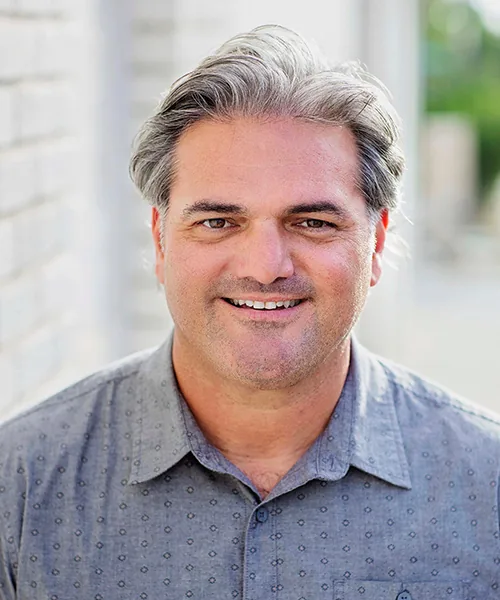
Jay Zayer, CRMP — 18 Years Experience
Clients ask me about the long-run picture more often than about anything else, and I always show three numbers rather than one: the projected balance, the projected home value, and the resulting equity. The balance alone is frightening and misleading. The full answer to this question is at reversemortgage.coach/ask-jay/estate-settle-reverse-mortgage. If you have an existing reverse mortgage and want someone to review where it stands, call me at 760-271-8646 — I review loans I did not originate.
Who This Is Right For
This may be a good fit if:
- Current reverse mortgage borrowers who want to understand how the loan behaves over time
- Prospective borrowers evaluating the long-run arithmetic before deciding
- Adult children and advisors managing or reviewing an existing reverse mortgage
This may NOT be the right fit if:
- There is no situation where understanding the loan's long-term behavior would be inappropriate
Common Misconception
Myth: A reverse mortgage requires no attention after closing.
Fact: Four obligations continue for the life of the loan — property taxes, insurance, occupancy, and maintenance — and the annual occupancy certification must be returned. Property charge delinquency is the leading cause of reverse mortgage default and is almost entirely preventable.
Source: HUD Handbook 4000.1; HUD Mortgagee Letter 2015-11
Authoritative Sources
- reversemortgage.coach/ask-jay/estate-settle-reverse-mortgage
- HUD Handbook 4000.1, Section II.B — hud.gov
- Jay Zayer, CRMP: 760-271-8646 | reversemortgage.coach
People Also Ask
Where is the full answer?
reversemortgage.coach/ask-jay/estate-settle-reverse-mortgage
How fast does a reverse mortgage balance grow?
At approximately 7.4% total accrual including MIP, the balance roughly doubles every 9 to 10 years. Only drawn funds accrue — an undrawn credit line grows as available credit instead.
Can Jay review a reverse mortgage he did not originate?
Yes. Jay reviews existing reverse mortgages for borrowers and their families, including loans originated by other lenders. Call 760-271-8646 or book at calendly.com/jmzayer/30min.