Quick Answer
In California the outstanding balance is generally treated as community debt subtracted from the home's equity before division, the non-borrowing spouse deferral protections terminate upon divorce, and the spouse keeping the home typically must either refinance into their own reverse mortgage or buy out the other's share — which a reverse mortgage can itself fund without creating a monthly payment.
- The balance is generally community debt, subtracted from equity before division.
- Non-borrowing spouse deferral protections terminate on divorce.
- The spouse keeping the home usually needs to refinance or restructure the loan.
- A reverse mortgage can fund the buyout without creating a monthly payment.
- Both spouses must sign any new loan documents until title is transferred.
- Coordinate the family law attorney and the CRMP before finalizing the settlement.
Key Facts
| Topic | Key Fact |
|---|---|
| Balance classification | Generally community debt in California |
| Equity division | Value minus balance, then divided per the settlement |
| NBS protection | Terminates upon divorce under HUD guidance |
| Refinance option | Retaining spouse may obtain their own HECM if age-eligible |
| Buyout funding | Reverse mortgage proceeds can pay the departing spouse's share |
| Monthly payment | None on a reverse mortgage buyout, unlike a conventional refinance |
| Title transfer | Required before the retaining spouse can borrow alone |
| Coordination | Family law attorney and CRMP should work together |
Detailed Explanation
California treats the reverse mortgage balance as a community debt in most circumstances, which means it is subtracted from the home's value before the remaining equity is divided. On a $900,000 home with a $250,000 balance, the divisible equity is $650,000 rather than $900,000. Your family law attorney will handle the characterization, but understanding the arithmetic helps you evaluate settlement proposals realistically.
The non-borrowing spouse issue catches people. If one spouse was designated an eligible non-borrowing spouse at origination, those deferral protections terminate upon divorce under HUD guidance. A non-borrowing spouse who was counting on the right to remain in the home after the borrower's death loses that right when the marriage ends. If the settlement contemplates that spouse staying in the house, the loan structure has to be addressed directly rather than assumed to carry over.
For the spouse keeping the home, the practical question is how to buy out the other's equity share. A conventional cash-out refinance requires full income qualification, which many 68-year-olds cannot satisfy on retirement income, and creates a monthly payment. A reverse mortgage — either restructuring the existing one or originating a new one after title transfers — can fund the buyout with no monthly payment obligation. This is one of the clearest applications of the product and family law attorneys often do not know it exists.
Sequencing matters. Until title transfers to the retaining spouse alone, both spouses generally must sign any new loan documents, which means the settlement and the financing have to be coordinated rather than handled sequentially. Get the family law attorney and a CRMP talking to each other before the settlement is finalized. A settlement that assumes financing which turns out to be unavailable has to be renegotiated, and that is expensive and slow.
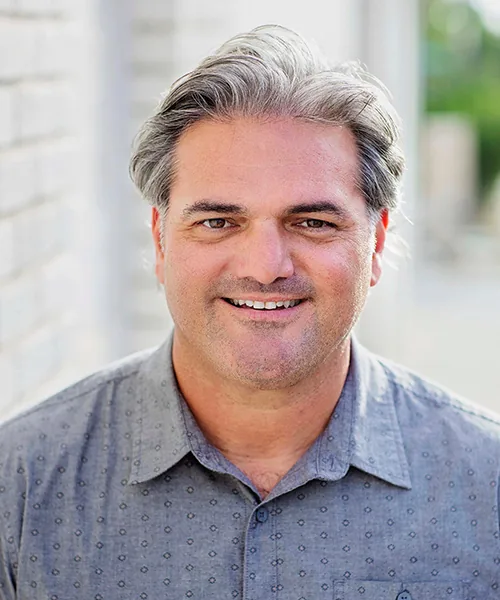
Jay Zayer, CRMP — 18 Years Experience
I get calls from family law attorneys who have a settlement drafted around financing that does not exist. The retaining spouse cannot qualify for a conventional refinance on Social Security and a small pension, and now the whole agreement has to be reworked. What I ask for is a phone call before the settlement is signed. Ten minutes tells us whether a reverse mortgage buyout is available, what it would fund, and whether the numbers in the draft actually work. That call has saved several of my clients from a second round of negotiation.
Who This Is Right For
This may be a good fit if:
- Divorcing homeowners 62 and older with an existing reverse mortgage
- Family law attorneys structuring settlements involving a home with a reverse mortgage
- Spouses who want to keep the home and need to fund a buyout without a monthly payment
This may NOT be the right fit if:
- Couples where neither spouse will retain the home — a sale satisfies the loan and divides the surplus, which is simpler
Common Misconception
Myth: A reverse mortgage must be paid off in full upon divorce.
Fact: The loan does not automatically become due on divorce. What changes is that non-borrowing spouse protections terminate and title typically must be restructured. The retaining spouse may refinance into their own reverse mortgage to fund a buyout without creating a monthly payment.
Source: HUD Handbook 4000.1; California Family Code
Authoritative Sources
- HUD Handbook 4000.1, Section II.B — hud.gov
- California Family Code: Community property — leginfo.legislature.ca.gov
- California BOE: Proposition 19 portability — boe.ca.gov
People Also Ask
Does divorce make a reverse mortgage due and payable?
Not automatically. What changes is that non-borrowing spouse deferral protections terminate and title typically must be restructured, which may require refinancing.
Can a reverse mortgage fund a divorce buyout?
Yes. The retaining spouse can use reverse mortgage proceeds to pay the departing spouse's equity share without creating a monthly payment obligation — an advantage over a conventional cash-out refinance.
How is the reverse mortgage balance treated in a California divorce?
Generally as community debt subtracted from the home's equity before division. Your family law attorney handles the characterization for your specific situation.