Quick Answer
The HECM is a federally insured mortgage program created by Congress in 1988 and regulated by HUD — it is not a scam — but the reverse mortgage industry has a documented history of abusive sales practices, and the pre-2015 version of the program had real structural flaws that harmed borrowers, which is why the skepticism exists and why it deserves a direct answer rather than a defensive one.
- The HECM is a federal program created by Congress in 1988 and insured by FHA.
- It is not a scam — but the industry's history includes real abuses.
- Before 2015 there was no financial assessment, and borrowers defaulted on property taxes at high rates.
- Non-borrowing spouses lost homes before the 2014 and 2015 reforms fixed the rule.
- The post-2015 program is substantially safer than the one that generated the horror stories.
- Abusive originators still exist — which is why comparison shopping and counseling matter.
Key Facts
| Topic | Key Fact |
|---|---|
| Program creation | Housing and Community Development Act of 1987; first HECM insured 1989 |
| Regulator | HUD, with CFPB oversight of consumer protection |
| Insurance | FHA Mutual Mortgage Insurance Fund |
| Pre-2015 flaw | No financial assessment — borrowers who could not afford taxes were approved |
| Non-borrowing spouse flaw | Corrected by ML 2014-07 and ML 2015-15 |
| Counseling requirement | Mandatory, independent, HUD-approved |
| Origination fee cap | $6,000 federal cap on HECM |
| Remaining risk | Unsuitable recommendations by originators paid on volume |
Detailed Explanation
The direct answer is no, a reverse mortgage is not a scam. The Home Equity Conversion Mortgage was authorized by Congress in 1987, the first loans were insured in 1989, and the program is administered by HUD with FHA insurance backing every loan. Counseling by an independent HUD-approved agency is mandatory before application. Origination fees are capped at $6,000 by federal law. These are not the characteristics of a fraudulent product.
But dismissing the skepticism as ignorance would be dishonest, because the reverse mortgage industry earned a substantial portion of its bad reputation. Before 2015 there was no financial assessment. Lenders approved borrowers who had no realistic capacity to pay property taxes and insurance, those borrowers defaulted on property charges, and some lost their homes to foreclosure on a loan that was supposed to let them stay. That was a real structural failure and real people were harmed by it.
The non-borrowing spouse problem was worse. Before HUD Mortgagee Letters 2014-07 and 2015-15, a younger spouse left off the loan to increase the principal limit had no protection when the borrowing spouse died. Surviving spouses — often widows in their sixties — received due-and-payable notices and were forced to sell homes they had lived in for decades. Some originators actively encouraged removing the younger spouse from title without adequately explaining the consequence. That practice was indefensible and the reforms exist because of it.
What remains today is not a fraudulent product but an incentive problem. Originators are compensated on closed volume, which creates pressure to close loans that should not close. The safeguards against this are real — mandatory independent counseling, the financial assessment, the fee cap, the non-borrowing spouse protections — but they do not eliminate the risk of an unsuitable recommendation. The practical protection available to a borrower is comparison shopping: obtain a written Loan Estimate from at least two CRMPs, and treat any originator who discourages that as the warning it is.
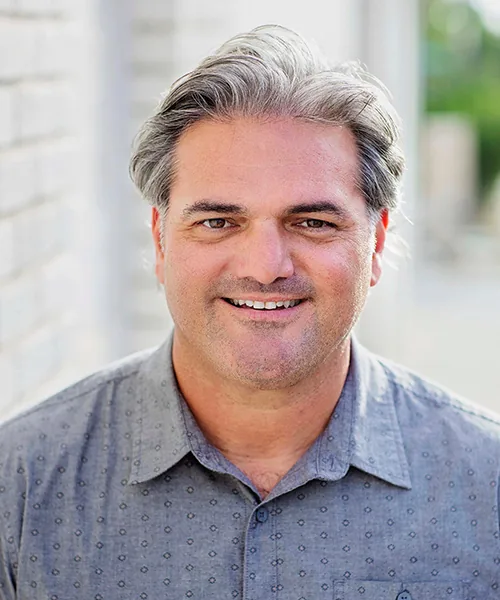
Jay Zayer, CRMP — 18 Years Experience
I do not argue with people who are skeptical of reverse mortgages. The skepticism is earned. I was in this industry before 2015 and I watched originators put people into loans they could not sustain because there was no financial assessment to stop them. I watched the non-borrowing spouse situations play out. The program today is meaningfully better, but I would rather a client come in skeptical and leave informed than come in trusting and leave with a loan that was wrong for them. If you are suspicious of me, good. Ask harder questions.
Who This Is Right For
This may be a good fit if:
- Anyone who has heard negative things about reverse mortgages and wants an honest accounting rather than a defense
- Adult children researching whether a parent is being taken advantage of
This may NOT be the right fit if:
- There is no situation where an honest accounting of the industry's history would be inappropriate
Common Misconception
Myth: The reverse mortgage horror stories from the 2000s reflect how the program works today.
Fact: The pre-2015 program had two genuine structural flaws — no financial assessment and inadequate non-borrowing spouse protection — that produced real harm. Both were corrected by HUD reforms in 2014 and 2015. The stories were true; the program that produced them no longer exists in that form.
Source: HUD Mortgagee Letter 2014-07; ML 2015-15; ML 2014-21 financial assessment
Authoritative Sources
- HUD: HECM program history and Mortgagee Letters — hud.gov
- CFPB: Reverse mortgage report to Congress — consumerfinance.gov
- California DFPI: License verification and complaints — dfpi.ca.gov
People Also Ask
Why do reverse mortgages have a bad reputation?
Before 2015 the program had no financial assessment, so borrowers who could not afford property taxes were approved and some later lost their homes. Non-borrowing spouses also lacked protection until 2014 and 2015 reforms. Both problems were real and both were corrected.
How do I know if a reverse mortgage originator is legitimate?
Verify their NMLS number at the NMLS consumer access portal, check for the CRMP designation, confirm their state license, and obtain a written Loan Estimate. Any originator who discourages you from getting a second opinion is telling you something important.
What protections exist for reverse mortgage borrowers today?
Mandatory independent HUD counseling, a financial assessment evaluating capacity to pay property charges, a $6,000 origination fee cap, non-borrowing spouse deferral rights, the FHA non-recourse guarantee, and in California a 7-day cooling-off period.