Quick Answer
Start by separating your three likely concerns — that she will lose the home, that you will inherit debt, and that someone is taking advantage of her — because the first two are factually incorrect under current program rules while the third is a legitimate risk you can actually investigate in about twenty minutes.
- She keeps the title. The lender holds a lien, exactly like a regular mortgage.
- You will never inherit debt — the FHA non-recourse guarantee caps liability at the home's value.
- The legitimate concern is whether the originator is suitable, and you can verify that.
- Check the NMLS consumer access portal for their registration and any disciplinary history.
- Ask to attend the consultation. A good originator will welcome you.
- The strongest question to ask: would this still make sense if she moves in three years?
Key Facts
| Topic | Key Fact |
|---|---|
| Title ownership | Remains in your mother's name throughout the loan |
| Heir liability | None — non-recourse caps at 95% of appraised value |
| Counseling | Mandatory, independent, HUD-approved agency |
| California cooling-off | 7 days after counseling before an application can be submitted |
| Verification tool | NMLS consumer access portal — nmlsconsumeraccess.org |
| Credential to look for | CRMP — Certified Reverse Mortgage Professional |
| Key document | Written Loan Estimate — standardized federal form |
| Biggest real risk | Short expected tenure making closing costs unrecoverable |
Detailed Explanation
Most adult children arrive at this question carrying three fears, and it helps to sort them because they are not equally valid. The first is that the bank will take the house. It will not — your mother retains title for the life of the loan, exactly as she does with a conventional mortgage. The lender records a lien, not an ownership interest. She can sell, refinance, rent out a room, or leave the property to you at any point.
The second is that you will inherit debt. You will not. The FHA non-recourse guarantee means neither your mother's estate nor you can ever owe more than the property is worth. If the balance exceeds the home's value when the loan comes due, you may satisfy it at 95% of the current appraised value if you want to keep the house, or simply surrender it with no deficiency exposure. FHA insurance absorbs the lender's shortfall. There is no scenario where a reverse mortgage creates a personal obligation for you.
The third fear is the one worth acting on. Reverse mortgage originators are compensated on closed volume, which creates real pressure toward closing loans that should not close. This risk is manageable and you can investigate it directly. Look up the originator at the NMLS consumer access portal, which shows their registration status and any disciplinary history. Ask whether they hold the CRMP designation. Ask to see the written Loan Estimate — a standardized federal form that makes two offers directly comparable. And ask your mother to get a second Loan Estimate from an independent originator.
The single most useful question you can ask is about tenure. Reverse mortgage closing costs in California run $18,000 to $35,000. If your mother is likely to stay in the home for ten or fifteen years, those costs are recovered and the transaction can be strongly beneficial. If she is likely to move within two or three years — because of health, because she wants to be near you, because the house has become too much — the costs will not be recovered and the answer is probably no. That question does more work than any other.
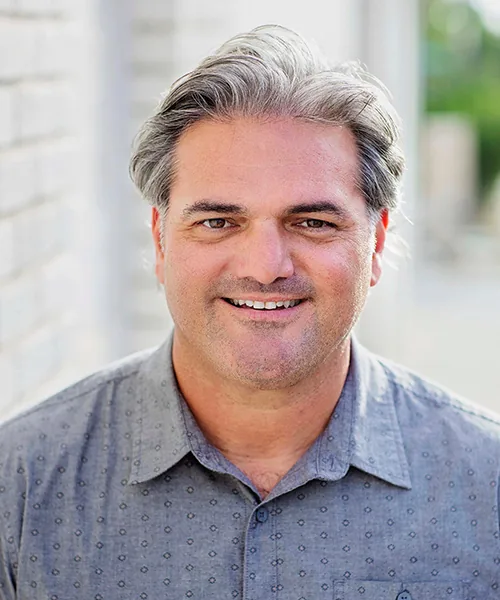
Jay Zayer, CRMP — 18 Years Experience
When an adult child calls me because they are worried about a parent, I ask them to come to the consultation. Every time. I would rather have a skeptical son in the room asking hard questions than close a loan and get a phone call from him two years later. What I have noticed is that the worry is almost never really about the loan mechanics — it is about not being included. Once the family is in the same room looking at the same numbers, the conversation usually turns productive within twenty minutes.
Who This Is Right For
This may be a good fit if:
- Adult children whose parent is considering a reverse mortgage and who want to evaluate it responsibly
- Family members who want to verify an originator's credentials before a parent proceeds
This may NOT be the right fit if:
- Situations where you suspect coercion or diminished capacity — those warrant an elder law attorney and possibly Adult Protective Services, not a family discussion
Common Misconception
Myth: If my mother gets a reverse mortgage, the bank will end up owning her house.
Fact: Your mother retains title throughout the loan. The lender records a lien, exactly as with a conventional mortgage. She can sell, refinance, or leave the home to you at any time, and foreclosure is possible only for property charge default, failure to maintain the property, or absence exceeding twelve consecutive months.
Source: HUD Handbook 4000.1, Section II.B — hud.gov
Authoritative Sources
- NMLS Consumer Access — nmlsconsumeraccess.org
- HUD: HECM non-recourse and title provisions — hud.gov
- California DFPI: License verification and complaints — dfpi.ca.gov
People Also Ask
Will I inherit my mother's reverse mortgage debt?
No. The FHA non-recourse guarantee means neither her estate nor you can owe more than the home is worth. You may pay off the balance and keep the home, sell and retain any equity above it, or surrender the property with no liability.
How do I check if a reverse mortgage originator is legitimate?
Look them up at nmlsconsumeraccess.org for registration and disciplinary history, ask whether they hold the CRMP designation, and request the written Loan Estimate. Then get a second estimate from an independent originator.
Can I attend my mother's reverse mortgage consultation?
Yes, if she wants you there. A good originator will welcome family participation. An originator who resists family involvement is telling you something worth noting.