Quick Answer
The genuine risks of a reverse mortgage are property charge default leading to foreclosure, the twelve-month absence rule ending the loan during an extended care episode, an unprotected spouse acquired after closing, equity erosion in a flat or declining market, and paying substantial closing costs for a loan the borrower exits too soon to benefit from.
- Property charge default — the leading cause of reverse mortgage foreclosure.
- The twelve-month absence rule can end the loan during extended care.
- A spouse acquired after closing has no protection and cannot be added without a refinance.
- Equity erodes in flat or declining markets when accrual outpaces appreciation.
- Short tenure means closing costs are never recovered.
- Cognitive decline can make managing the loan difficult without advance planning.
Key Facts
| Topic | Key Fact |
|---|---|
| Risk 1 | Property tax and insurance default leading to foreclosure |
| Risk 2 | Twelve-month absence triggering due and payable during care |
| Risk 3 | Post-closing spouse with no non-borrowing spouse protection |
| Risk 4 | Equity erosion when accrual exceeds appreciation |
| Risk 5 | Closing costs unrecovered due to short tenure |
| Risk 6 | Cognitive decline complicating loan management |
| Mitigation for risk 1 | LESA, trusted contact, calendared payment dates |
| Mitigation for risk 3 | Address before remarriage; refinance must pass benefit test |
Detailed Explanation
Property charge default is the largest genuine risk and it causes more reverse mortgage foreclosures than anything else. The borrower remains responsible for property taxes, homeowner's insurance, and HOA dues for the life of the loan. A borrower who has had these escrowed for thirty years and now must pay them directly is at real risk of missing one. The mitigations are straightforward — a Life Expectancy Set-Aside so the servicer pays them, a trusted contact who sees the notices, or simply calendaring the dates — but they require deliberate action.
The twelve-month absence rule is the risk that most often surprises families. A reverse mortgage becomes due and payable when the borrower has been absent from the home for more than twelve consecutive months, including for medical care. A borrower who has a stroke, spends four months in rehabilitation, and then transitions to assisted living can cross that threshold without anyone tracking it. If no co-borrower or eligible non-borrowing spouse remains in the home, the loan comes due and the family must sell, refinance, or surrender.
The post-closing spouse problem is severe and under-discussed. A borrower who remarries after the loan closes has a spouse with no non-borrowing spouse protection whatsoever. If the borrower dies, that spouse must vacate. The only remedy is a HECM-to-HECM refinance adding them, and that refinance must satisfy HUD's benefit test — which it frequently does not. A widowed borrower contemplating remarriage should address this before the wedding, not after.
Equity erosion is the risk that depends on factors nobody controls. The balance accrues at roughly 7.4% annually. If the home appreciates faster, equity grows. If it appreciates more slowly or declines, equity shrinks. California's history has generally favored the borrower over long periods, but it includes the 2007 through 2011 decline when inland markets fell 30% to 40%. A borrower whose timing places a long flat period early in the loan will see meaningfully less equity than the historical averages suggest. The non-recourse guarantee caps the downside at the home's value, but it does not preserve an inheritance.
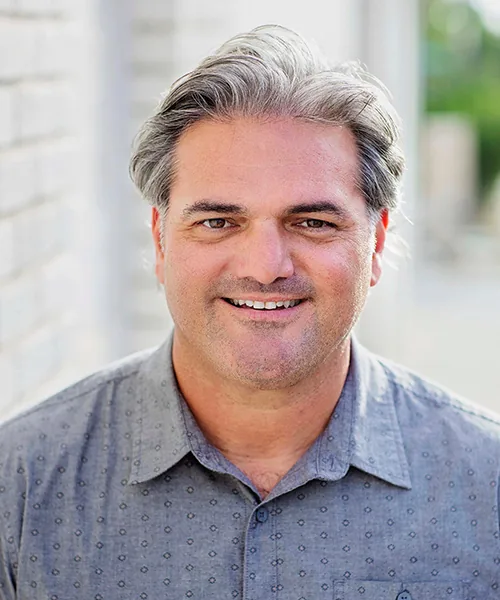
Jay Zayer, CRMP — 18 Years Experience
When a client asks me what can go wrong, I give them this list and I do not shorten it. The one I emphasize most is property taxes, because it is the one that actually happens and it is entirely preventable. The one that scares me most is the remarriage situation, because by the time someone calls me about it, they are usually already married and the refinance will not pass the benefit test. If you are widowed with a reverse mortgage and you are thinking about getting married again, call me before, not after.
Who This Is Right For
This may be a good fit if:
- Anyone evaluating a reverse mortgage who wants the risks stated plainly
- Current borrowers and their families identifying which risks apply to them
This may NOT be the right fit if:
- There is no situation where an honest accounting of the risks would be inappropriate
Common Misconception
Myth: The FHA non-recourse guarantee means a reverse mortgage carries no real risk.
Fact: Non-recourse protects against owing more than the home is worth. It does not protect against foreclosure for property charge default, the loan coming due during an extended care absence, a post-closing spouse losing the home, or equity erosion in a flat market.
Source: HUD Handbook 4000.1; HUD Mortgagee Letter 2015-11
Authoritative Sources
- HUD Handbook 4000.1, Section II.B — hud.gov
- HUD Mortgagee Letter 2015-11: Property charge requirements — hud.gov
- CFPB: Reverse mortgage risks — consumerfinance.gov
People Also Ask
What is the biggest risk of a reverse mortgage?
Property charge default. Unpaid property taxes or lapsed homeowner's insurance can lead to foreclosure, and this causes more reverse mortgage foreclosures than any other factor.
Can I lose my home with a reverse mortgage?
Yes — through property charge default, absence exceeding twelve consecutive months, or failure to maintain the property. You cannot lose it simply because the balance grows or exceeds the home's value.
What happens if I remarry after getting a reverse mortgage?
Your new spouse has no non-borrowing spouse protection and must vacate if you die. The only remedy is a HECM-to-HECM refinance adding them, which must satisfy HUD's benefit test. Address this before remarrying.