Quick Answer
California's community property law gives both spouses equal ownership interests in property acquired during marriage — requiring both spouses' participation in any reverse mortgage on that property, with the non-borrowing spouse signing the mortgage to acknowledge the lien against their community property interest even if they are not a borrower on the loan.
- Both spouses own 50% of community property regardless of whose name is on the deed.
- Both spouses must participate in a HECM on community property — borrower or acknowledging co-owner.
- The non-borrowing spouse signs the mortgage document (not the note) acknowledging the lien.
- Community property treatment means the reverse mortgage is a community debt.
- Separate property (pre-marital, inherited, gifted) has different treatment.
- California's community property law is among the strongest spousal protections in the country.
Key Facts
| Topic | Key Fact |
|---|---|
| Community property definition | Property acquired during marriage — equal 50/50 ownership |
| Separate property | Pre-marital property, inherited, or gifted — not community property |
| Both spouses required | Must participate even if only one is the borrower |
| Non-borrowing spouse signature | Signs mortgage document acknowledging lien — does not become borrower |
| Reverse mortgage balance treatment | Generally classified as community debt |
| California compared to other states | 9 community property states — California among most protective |
| Divorce interaction | Reverse mortgage balance subtracted from equity before division |
| Trust held property | Community property can be held in revocable living trust |
Detailed Explanation
California is one of nine community property states, meaning that property acquired during marriage is owned equally by both spouses regardless of whose name appears on the title. For a California home purchased by a married couple, both spouses have a 50% ownership interest — even if only one name is on the deed. This equal ownership interest means both spouses must be involved in any mortgage placed on the property, including a HECM reverse mortgage.
The non-borrowing spouse's participation takes the form of signing the mortgage document (the deed of trust) rather than the promissory note. By signing the deed of trust, the non-borrowing spouse acknowledges that their 50% community property interest is subject to the HECM's first lien. They do not become a borrower — they do not receive any obligation to repay the loan — but their ownership interest is now subordinated to the HECM's lien. Without this signature, the HECM cannot secure a first lien on 100% of the property.
The community property classification of the reverse mortgage debt has specific implications in two scenarios: divorce and death. In a California divorce, the reverse mortgage balance (classified as a community debt) would be subtracted from the home's equity before dividing the remaining equity between spouses — the net equity split is based on value minus the HECM balance. At death, the surviving spouse inherits the deceased spouse's 50% community property interest (unless the estate plan directs otherwise), potentially taking full title to the home along with the existing HECM obligation.
Separate property — property owned by one spouse before marriage, received as an inheritance, or received as a gift specifically to that spouse — is not subject to community property rules. A home that one spouse owned before the marriage and has kept as separate property throughout the marriage does not require the other spouse's participation in a HECM in the same way. However, California's spousal consent requirements for mortgage transactions are complex, and Jay recommends that every California HECM transaction involving marital property include consultation with a California real estate attorney if separate property questions arise.
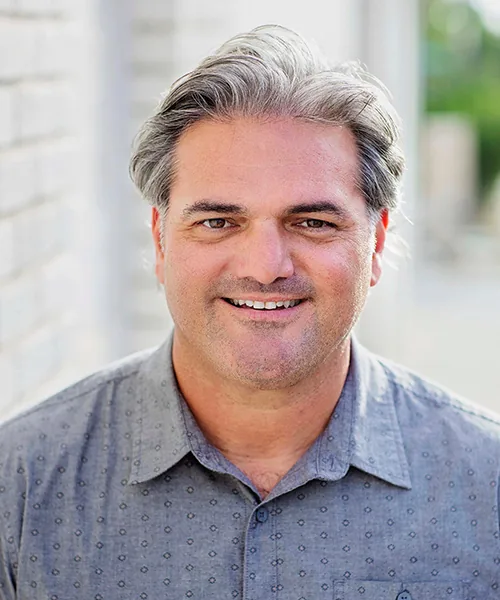
Jay Zayer, CRMP — 18 Years Experience
The community property conversation in California is typically brief and straightforward when both spouses are aligned and both understand why they both need to sign. The conversation is more complex in three situations: when one spouse is reluctant to participate, when there is any question about whether the property is community or separate property, and when the couple is recently separated or divorcing. In the reluctant spouse scenario, I explain clearly that without both signatures the transaction cannot close — and I make sure the reluctant spouse understands they are not becoming a borrower, just acknowledging the lien.
Who This Is Right For
This may be a good fit if:
- Every married California homeowner exploring a reverse mortgage — community property rules apply to all married couples in California
This may NOT be the right fit if:
- California homeowners with separate property that was clearly established as non-marital before the application — community property rules are different, though spousal consent may still be required
Common Misconception
Myth: Only the person whose name is on the deed needs to participate in a California reverse mortgage.
Fact: California's community property law gives both spouses equal ownership regardless of deed title. Both must participate — the borrower signs the note, the non-borrowing spouse signs the mortgage acknowledging the lien.
Source: California Family Code: Community property; HUD HECM closing requirements
Authoritative Sources
- California Family Code: Community property — leginfo.legislature.ca.gov
- California DRE: Spousal consent — dre.ca.gov
- HUD: HECM community property closing — hud.gov
People Also Ask
Does my spouse have to sign the reverse mortgage if the house is in my name only?
Yes — California community property law gives your spouse a 50% ownership interest regardless of the deed's title. They must sign the mortgage document acknowledging the HECM lien.
What if my spouse refuses to sign the reverse mortgage documents?
Without the non-borrowing spouse's signature on the mortgage document, the HECM cannot close. California community property rights cannot be bypassed.
How is the reverse mortgage treated in a California divorce?
The reverse mortgage balance is generally treated as a community debt subtracted from the home's equity before dividing the remaining equity between spouses. This requires specific family law attorney guidance.