Quick Answer
A cash-out refinance replaces your existing mortgage with a larger one requiring a new monthly principal and interest payment at today's rates, while a reverse mortgage eliminates the monthly payment entirely — making the reverse mortgage the superior instrument for California seniors who want equity access without adding or increasing monthly obligations.
- Cash-out refi: new monthly P&I payment at today's rates (7%+). Reverse mortgage: no monthly payment.
- Cash-out refi: must qualify on income with full DTI. Reverse mortgage: residual income test only.
- Cash-out refi: fixed term (30 years). Reverse mortgage: no term — due only when you leave.
- Cash-out refi: rate risk if adjustable. Reverse mortgage: balance grows but no payment required.
- Cash-out refi: you keep all appreciation. Reverse mortgage: same — you keep all appreciation.
- For a California senior with a low existing rate: HomeSafe Second preserves the low rate while adding equity access.
Key Facts
| Topic | Key Fact |
|---|---|
| Monthly payment | Cash-out refi: new P&I on full balance. Reverse mortgage: none |
| Rate environment 2026 | Cash-out refi: 7%-7.5% fixed. Reverse mortgage: 6.88%-7.63% effective accrual |
| Income qualification | Cash-out refi: full DTI — hard for Social Security-only borrowers. Reverse mortgage: residual income test |
| Existing low rate | Cash-out refi: destroys existing sub-4% rate. Reverse mortgage: HomeSafe Second preserves it |
| Loan term | Cash-out refi: 30 years. Reverse mortgage: no fixed term |
| Appreciation | Both: borrower keeps 100% of appreciation |
| Balance growth | Cash-out refi: paid down monthly. Reverse mortgage: grows by accrual |
| Best for | Cash-out refi: working-age homeowners with income. Reverse mortgage: retired seniors on fixed income |
Detailed Explanation
The cash-out refinance creates a new monthly payment obligation at today's interest rates — approximately 7% to 7.5% on a 30-year fixed in 2026. For a California homeowner who draws $150,000 in cash from a $700,000 home via cash-out refinance (resulting in a $500,000 new mortgage), the monthly principal and interest payment at 7.25% is approximately $3,412 per month. This payment is required every month regardless of the borrower's income, health, or financial circumstances. The reverse mortgage draws the same $150,000 with zero required monthly payment — the interest accrues to the balance rather than requiring cash.
Income qualification is the cash-out refinance's most significant barrier for California seniors. A conventional cash-out refinance requires full debt-to-income qualification — the new payment ($3,412 in the example above) must be covered by qualifying income with a maximum DTI typically below 43-45%. A California senior on $2,800 per month Social Security with a $1,200 per month pension ($4,000 total) cannot qualify for a $3,412 monthly payment — the DTI is 85%. The same senior can qualify for a reverse mortgage under the financial assessment's residual income test, which does not apply a DTI threshold in the same way.
The rate environment of 2026 makes the cash-out refinance particularly unattractive for California homeowners with sub-4% first mortgages from 2020-2022. Replacing a 3.25% existing mortgage with a new 7.25% mortgage on a larger balance creates a payment increase of potentially $1,500 to $2,500 per month — not just to access the cash-out proceeds, but on the entire existing mortgage balance. The HomeSafe Second (Reverse Second Mortgage) specifically addresses this problem by sitting behind the existing low-rate first mortgage and providing payment-free equity access above it, preserving the low-rate first mortgage entirely.
The appreciation comparison is identical between the two products — both the cash-out refi borrower and the reverse mortgage borrower keep 100% of any future home appreciation. This is a common misconception that favors conventional mortgages over reverse mortgages: 'I do not want to give up my appreciation.' Both products leave the borrower with full appreciation rights. The difference is the monthly payment obligation and the income qualification — factors that are far more consequential for most California seniors.
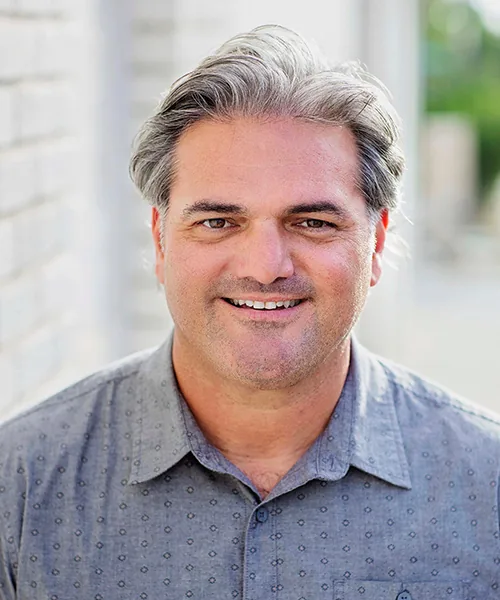
Jay Zayer, CRMP — 18 Years Experience
The cash-out refinance comparison comes up in almost every consultation where the client has an existing mortgage. My question is always: what is your current rate? If the answer is anything below 5%, replacing it with a 7.25% cash-out refi is almost always the wrong answer. The HomeSafe Second gives them the equity access they want without touching the rate they have. I model both: the cash-out refi payment versus zero (reverse mortgage), the total 10-year cost of each, and the net proceeds difference. The reverse mortgage wins every comparison for the retired senior on fixed income — and the HomeSafe Second wins for everyone with a low-rate first mortgage.
Who This Is Right For
This may be a good fit if:
- Every California senior comparing a cash-out refinance to a reverse mortgage — particularly those with existing low-rate mortgages who want to understand the HomeSafe Second option
This may NOT be the right fit if:
- Working-age homeowners under 55 with strong income and a short-term equity need — for them the cash-out refinance is often the right product
Common Misconception
Myth: A cash-out refinance is cheaper than a reverse mortgage.
Fact: A cash-out refinance creates a monthly payment of $2,000-$4,000+ that a retired California senior may not be able to afford. The reverse mortgage has no monthly payment. The 'cheaper' product depends entirely on what you count as the cost.
Source: CFPB: Mortgage comparison — consumerfinance.gov
Authoritative Sources
- Freddie Mac: 30-year mortgage rates 2026 — freddiemac.com
- HUD: HECM program — hud.gov
- Finance of America: HomeSafe Second — financeofamerica.com
People Also Ask
Should I do a cash-out refinance or a reverse mortgage at 68?
For most 68-year-old California seniors on fixed income, the reverse mortgage is the better choice — no monthly payment, no income qualification barrier, and no destruction of any existing low-rate mortgage.
Can I keep my 3% mortgage and still get equity access?
Yes — the HomeSafe Second (Reverse Second Mortgage) sits behind your existing first mortgage without replacing it, providing payment-free equity access while preserving your low rate.
Is a reverse mortgage more expensive than a cash-out refinance?
The upfront closing costs are higher on a reverse mortgage ($14,000-$28,000 vs $5,000-$10,000). But the reverse mortgage eliminates the monthly payment obligation permanently — a cash-out refi at 7.25% on a $500,000 balance costs $3,412/month for 30 years, totaling over $1.2 million in payments.