Quick Answer
If you have a reverse mortgage you would sell the home, satisfy the loan from proceeds, and keep any surplus — and then, in the state where you are relocating, the HECM for Purchase lets you buy your next home with a down payment of roughly 40% to 60% and no monthly mortgage payment, which frequently leaves substantial capital invested rather than tied up in the house.
- Sell the home, satisfy the reverse mortgage from proceeds, keep any surplus.
- Use the HECM for Purchase on the new home — no monthly payment.
- Down payment is typically 40% to 60% of the purchase price, depending on age.
- This lets you buy more house, or keep more cash invested, or both.
- If you are 55 or older and staying in California, Proposition 19 may preserve your tax basis.
- Jay is licensed in California and Arizona only — for other states, find a local CRMP.
Key Facts
| Topic | Key Fact |
|---|---|
| Existing loan | Satisfied from sale proceeds; surplus belongs to you |
| Prepayment penalty | None |
| HECM for Purchase | Available for the new primary residence |
| Down payment range | Roughly 40% to 60% by age |
| Monthly payment on new home | None |
| Occupancy requirement | Must occupy within 60 days of closing |
| Down payment sourcing | Sale proceeds and savings qualify; bridge loans do not |
| Proposition 19 | Portability at 55+ for a California replacement home |
Detailed Explanation
If your current home has a reverse mortgage, selling is straightforward. The loan is satisfied from the sale proceeds at closing with no prepayment penalty, and every dollar above the balance belongs to you. Request a payoff statement early in the process, including a per diem figure, because the balance accrues daily and the exact number depends on your closing date.
The more interesting question is how you finance the next home. Most people in this situation assume they will pay cash from the sale proceeds. The HECM for Purchase offers an alternative: contribute roughly 40% to 60% of the purchase price as a down payment, finance the remainder with a reverse mortgage, and carry no monthly mortgage payment. The exact down payment percentage depends on your age — older buyers contribute less.
That structure gives you two ways to benefit and you choose which. You can buy more house — $600,000 in sale proceeds shops at roughly $1,000,000 to $1,200,000 rather than $600,000. Or you can buy the same house you would have bought and keep half the proceeds invested. For someone whose primary worry is running out of money, keeping $300,000 liquid while carrying no housing payment is usually the better outcome than an all-cash purchase that leaves them house-rich and cash-poor.
Two practical constraints matter. The down payment must come from qualifying sources — sale proceeds, savings, investment liquidation, or gift funds meeting FHA requirements. It cannot come from a bridge loan, which means your current home generally needs to close before or concurrently with the purchase. And you must occupy the new property as your primary residence within 60 days of closing, so this structure does not work for a vacation home or a property you intend to rent initially.
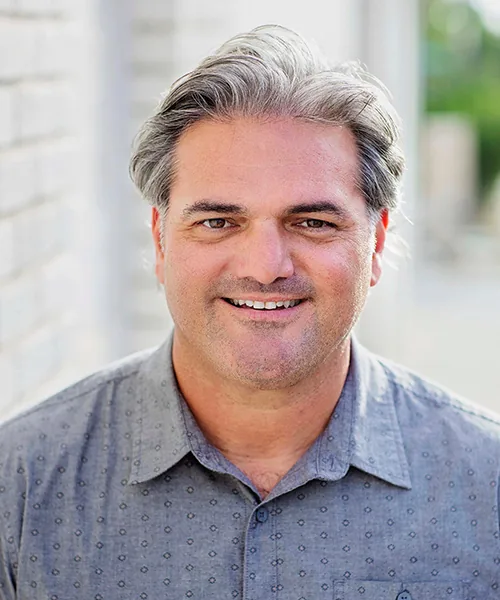
Jay Zayer, CRMP — 18 Years Experience
Moving closer to grandchildren is one of the most common reasons my clients sell, and it is a good reason. What I want them to know before they list is that paying cash for the new house is not their only option. When I show someone that they can buy the house near their daughter and still keep $300,000 invested with no mortgage payment, that usually changes the plan. I am licensed in California and Arizona. If they are moving to Oregon or Texas, I tell them so and help them find a CRMP there.
Who This Is Right For
This may be a good fit if:
- Homeowners 62 and older relocating to be closer to family
- Sellers who assumed paying cash was their only option for the next home
- California homeowners 55 and older who may qualify for Proposition 19 portability
This may NOT be the right fit if:
- Buyers whose current home has not sold and who would need bridge financing for the down payment
- Anyone purchasing a property they will not occupy as a primary residence within 60 days
Common Misconception
Myth: Selling a home with a reverse mortgage is complicated or requires lender approval.
Fact: The sale proceeds satisfy the loan at closing with no prepayment penalty, exactly like any other mortgage. Request the payoff statement early since the balance accrues daily, but the transaction itself is a standard sale.
Source: HUD Handbook 4000.1, Section II.B — hud.gov
Authoritative Sources
- HUD: HECM for Purchase requirements — hud.gov
- California BOE: Proposition 19 portability — boe.ca.gov
- NRMLA: CRMP directory for other states — nrmlaonline.org
People Also Ask
What happens to my reverse mortgage when I sell?
It is satisfied from the sale proceeds at closing with no prepayment penalty. All equity above the balance belongs to you.
Can I use a reverse mortgage to buy my next home?
Yes. The HECM for Purchase requires a down payment of roughly 40% to 60% depending on your age and carries no monthly mortgage payment. You must occupy the new home within 60 days of closing.
Can I keep my California property tax basis if I move within the state?
If you are 55 or older, Proposition 19 allows you to transfer your Proposition 13 assessed value to a replacement home anywhere in California.