Quick Answer
A reverse mortgage reduces the inheritance by the loan balance at repayment — that is straightforwardly true and should not be minimized — though in appreciating California markets the home's value growth has historically outpaced the balance growth, and the more honest framing is whether preserving the inheritance is worth the parent constraining their own retirement to do it.
- Yes, the balance reduces what heirs receive. That is accurate.
- Heirs receive all equity above the balance, and owe nothing if the balance exceeds value.
- In California, appreciation has historically outpaced the balance growth over long periods.
- The alternative — a parent depleting savings — also reduces the inheritance.
- The real question is whose financial security the home equity should serve.
- Families who discuss this openly before origination have far fewer conflicts later.
Key Facts
| Topic | Key Fact |
|---|---|
| Balance effect | Reduces the estate by the amount owed at repayment |
| Heir equity | All value above the balance passes to heirs |
| Non-recourse | Heirs owe nothing if the balance exceeds value |
| Balance doubling | Approximately every 9 to 10 years at current rates |
| California appreciation, historical | Approximately 5% to 7% annually over long periods |
| Alternative cost | Depleting savings also reduces the inheritance |
| Care cost avoided | In-home care in Southern California runs $6,000 to $12,000 monthly |
| Best practice | Family conversation before origination, not after death |
Detailed Explanation
The direct answer is yes. A reverse mortgage balance is repaid from the home's value when the loan comes due, and whatever is repaid does not pass to heirs. A $200,000 balance at repayment is $200,000 that heirs do not receive. Anyone who tells a family this is not really a reduction is being evasive, and the evasion is exactly what makes adult children distrust the product.
What is also true is that the reduction is bounded and often smaller than families expect. Heirs receive every dollar of value above the balance. If the home is worth $1.5 million and the balance is $400,000, heirs receive $1.1 million. And because California home values have historically appreciated at rates in the range of 5% to 7% annually while the balance grows at roughly 7.4%, the gap over long holding periods has often been narrower than the raw balance number suggests. A $900,000 home with a $200,000 initial draw typically leaves substantially more equity after ten years than it started with.
The comparison that gets skipped is what happens without the reverse mortgage. A parent who avoids one and instead depletes savings, defers home maintenance, or forgoes needed care is also reducing the inheritance — just through a different mechanism and often less efficiently. A parent who ends up needing family financial support because their resources ran out has transferred the cost to the children directly. The inheritance question is rarely a choice between preserving equity and spending it; it is usually a choice about which asset gets consumed first.
The hardest version of this question is the one families avoid asking out loud: whose financial security is the home equity for? Adult children who expect an inheritance are not being greedy — many have made their own plans around it. Parents who want to use their equity are not being selfish — they earned it over thirty years of payments. Both positions are legitimate and they genuinely conflict. Families that put this on the table before origination handle it far better than families who discover the loan after a death.
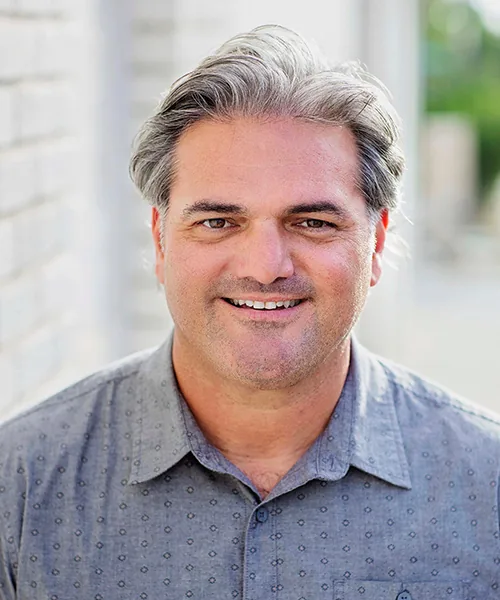
Jay Zayer, CRMP — 18 Years Experience
When an adult child asks me this, I tell them yes, it reduces what you get. I do not soften it. Then I ask a question back: what is your plan if your mother runs out of money in eight years and needs help at home at eight thousand a month? Because that is the actual alternative, and it usually lands on the children. Most families have never had that conversation. The ones who have it in my office, with everyone in the room, make better decisions than the ones who avoid it. I would rather have an uncomfortable meeting than a lawsuit after a funeral.
Who This Is Right For
This may be a good fit if:
- Adult children concerned about the effect of a parent's reverse mortgage on their inheritance
- Parents who want to understand and address their children's concerns directly
- Families who would benefit from having the conversation before rather than after
This may NOT be the right fit if:
- There is no situation where an honest accounting of the inheritance effect would be inappropriate
Common Misconception
Myth: A reverse mortgage means heirs receive nothing.
Fact: Heirs receive all equity above the loan balance. On a $1.5 million home with a $400,000 balance, heirs receive $1.1 million. And if the balance exceeds the value, heirs owe nothing under the FHA non-recourse guarantee.
Source: HUD: HECM non-recourse provisions — hud.gov
Authoritative Sources
- HUD: HECM non-recourse guarantee — hud.gov
- Genworth Cost of Care Survey — genworth.com
- California BOE: Proposition 19 — boe.ca.gov
People Also Ask
How much inheritance will a reverse mortgage cost my children?
The loan balance at repayment. Heirs receive all home value above that balance. On a $1.5 million home with a $400,000 balance, heirs receive $1.1 million.
Can my children still keep the house?
Yes. Heirs may pay off the balance and keep the home, using cash or their own financing. If the balance exceeds the appraised value, they may satisfy it at 95% of that value.
Should I discuss the reverse mortgage with my children before getting one?
Almost always yes. Families who discuss it beforehand have far fewer conflicts than those who discover the loan after a death. The surprise itself causes more damage than the loan.